

LEDs are taking the lighting world by storm, replacing traditional incandescent bulbs in many places, but how do the two technologies differ? To help you understand them, this comparison of LED vs. incandescent lights will explore each fixture type. We will also compare them for various aspects, such as power consumption, light quality, durability, cost, etc.
Is LED Incandescent?
The short answer is no. LED is not incandescent. LED stands for Light-Emitting Diode. It represents a modern type of illumination that uses semiconductor chips to produce light.
Incandescent lights are a traditional illumination technology that relies on a thin wire filament encased in a gas-filled bulb to light up. Although still in use today, they are quickly becoming obsolete, and LED fixtures are taking their place.
How to Tell the Difference Between LED and Incandescent Lights
You can quickly tell LED and incandescent fixtures apart. First, manufacturers usually label the package or product to indicate whether it’s a diode light, incandescent fixture, or other lighting type.
Visual inspection can also help you know if a light is an LED or incandescent type. In its off-state, an LED has a cluster of light-emitting chips visible. A filament-based light bulb will have a coiled tungsten wire instead.
Another physical difference between the two lights is that while incandescent fixtures are typically bulbs, LEDs come in various designs besides the “bulb” shape.
For example, they can be lighting strips, panels, or tubes. They usually come with a translucent cover enclosing the light-emitting diodes or chips to reduce glare.

Resource: https://www.youtube.com/watch?v=cQG9HD7bvDw
LED Vs. Incandescent Lights
Here’s a detailed comparison of semiconductor lighting vs. filament-based lighting to give you a clear picture of what to expect from each illumination type. Let’s start with how each works.
Working Difference
Incandescent bulbs use incandescence to work. This phenomenon refers to light emission by a hot object. They contain a long and thin coil of tungsten wire (filament).
Tungsten has a high resistance to current. It also has a high melting point. The high resistance causes the wire to heat up and glow when current passes through it, while the high melting point prevents it from vaporizing.
LED fixtures work very differently. Their light-emitting component is a semiconductor like gallium arsenide or indium phosphide. These make up a diode that allows current to only flow in one direction.
Applying an electrical current to the diode causes electronics to move from one chip region to another. This motion releases energy in the form of photons of light.
In addition to the diodes, LED lights have a driver circuit to regulate their operation. The board also contains a metal core or heat sink to dissipate heat in higher wattage levels.
Efficiency and Power Consumption
LEDs are highly efficient, producing more lumens per watt than incandescent. They generally turn about 80% to 90% of energy to light. Filament bulbs are wasteful of energy. They only convert 10% to 20% of the power to light. The remaining 80% to 90% gets lost as heat.
Light Quality and Performance
Incandescent bulbs emit a warm, yellowing light. In comparison, you can customize diode lighting into various options, from cool and soft to warm hues. This feature makes diode lighting more versatile when lighting different rooms.
Environmental Impact
Filament-based lamps may contain harmful materials like mercury, and improper disposal can contaminate the environment. They also consume more power and require frequent replacements, contributing to the waste problem.
Cost Comparison
LEDs cost more initially. However, given their higher efficiency, you spend less to use them, making them a more cost-effective option than filament-based fixtures. Their prices also keep dropping. Gone are the days when they would cost more than twice the price of filament lamps.
In comparison, incandescent fixtures are cheaper overall. However, their energy costs are higher, making them more expensive to own. You also have to replace them more often. In the long run, they can be a more costly option.
Lifespan and Durability
A filament serves for around 1000 hours before it goes out. Diodes last a very long time. On average, the lifespan of diode-based fixtures ranges between 25,000 hours and 50,000 hours, making them a more durable option. They also offer higher durability as they are more resistant to shock and vibrations.
Application Suitability
When choosing between LED or incandescent for outdoor lighting or indoor use, it helps to understand each option’s application limitations. Let’s see how they compare:
Diode-based illumination suits many settings, from homes to businesses and industrial facilities. You can use it indoors, outdoors, and in colder conditions. However, they are not suitable for use in hot environments.
Filament bulbs have limited usage options, given their fewer capabilities and color-changing features, among other specifications. They do not work well in the cold but can withstand higher temperatures than LED.
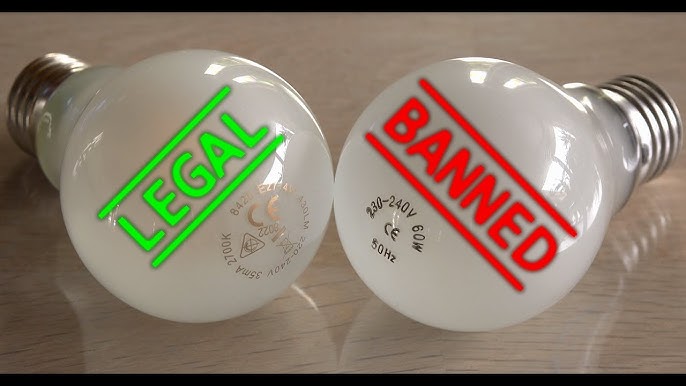
Resource: https://youtu.be/0aOY4mhYZRk?
Which is Better, LED or Incandescent Lights?
When choosing your lights, there are features you will want them to have. For instance, you may prefer fixtures that cost you less or offer better versatility in light creation or installation options.
After the LED vs. incandescent comparison above, it’s clear that diode lighting is better than filament-based illumination. Here is a summary of the advantages and disadvantages of each to make that clear.
LED light Advantages and Disadvantages
Advantages: Durability and long life, design and application versatility, higher energy efficiency, environmental friendliness, instant light, enhanced safety, installation ease, directionality, can work in cooler temperatures, more usability features.
Disadvantages: higher initial cost, dimmer incompatibility, unsuitability for high-heat applications, and color rendering limitation.
Incandescent Advantages and Disadvantages
Advantages: low upfront cost, warm color light benefit, simpler technology, better dimmer compatibility.
Disadvantages: power-hungry, higher operating costs, shorter lifespan and lower durability, environmental impact, reduced performance in cooler temperatures, limited design and features, fewer usability options.

Resource: https://www.youtube.com/watch?v=ksNh3T34Dmo
Why are LED Lights Better than Incandescent Bulbs?
Many countries are phasing out incandescent lighting and encouraging LED light adoption. Why? As we have seen in this guide, the advantages of LED outweigh the disadvantages.
Despite initially costing more, LEDs are more efficient and durable, while filament-based lamps are power-hungry and waste energy.
LEDs are also available in many design options, sizes, and other features, such as multi-colored strips with remote-controlled operation. All these variations make diode lights better in many ways.
Conclusion
Even as LED continues to replace traditional incandescent bulbs, many people choosing between the two options need to know why one outperforms the other. We explored their many differences in this comparison of LED vs. incandescent lights. We also compared the lights to help you understand them better, especially if you intend to change from traditional to LED lighting.

